Counseling Compact Reaches Operational Milestone With Six States
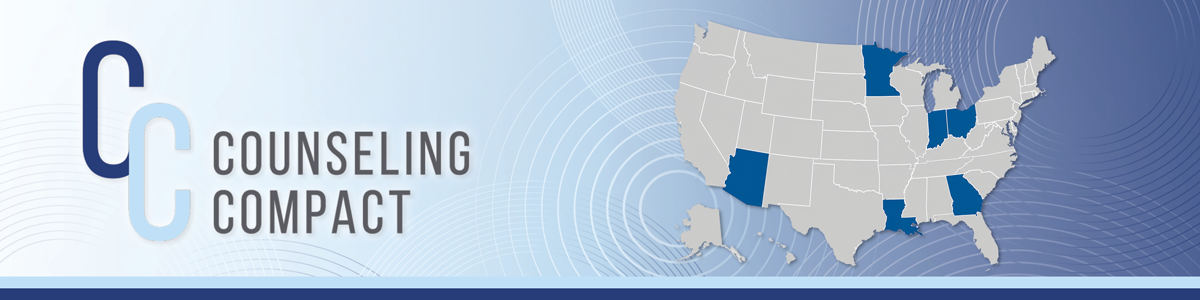
Since the Counseling Compact went live in September of 2025, six states have become fully operational and begun issuing Compact privileges to eligible licensed Professional Counselors. While many states have enacted the Compact through legislation, becoming operational marks the point at which Counselors can begin taking advantage of the Compact’s interstate practice benefits.
The Counseling Compact was created to improve licensure portability while preserving each state’s authority to regulate the Counseling profession and protect the public. Rather than creating a new national Counseling license, the Compact allows eligible Counselors to apply for privilege to practice in other participating states without obtaining a separate full license in each jurisdiction.
“The Compact has already generated strong interest from licensees in our six active states who are eager to practice across state lines,” said Greg Searls, Executive Director of the Counseling Compact Commission, “and that ability to expand their practice will only continue to grow as more states complete the requirements.”
Today, 39 states and the District of Columbia have enacted the Compact. As implementation continues, the number of operational states is expected to grow, further expanding opportunities for Counselors and increasing access to behavioral health services for clients nationwide.
“We’re seeing tremendous momentum with the 33 member states currently working toward becoming active and issuing privileges,” noted Searls.
The First Six Operational States
As of June 2026, the following states are operational:
- Arizona (September 2025)
- Minnesota (September 2025)
- Ohio (January 2026)
- Louisiana (April 2026)
- Georgia (June 2026)
- Indiana (June 2026)
Eligible Counselors who reside in one of these states can now apply for Compact privileges to practice in other operational Compact states.
Angie Smith, Chair of the Georgia Composite Board of Professional Counselors, Social Workers, and Marriage & Family Therapists, shared that “Georgia has been committed to the Counseling Compact from the very beginning, and I’m proud that we were the first state to enact it and are now among the first six operational states. The implementation process required thoughtful collaboration and persistence, especially in developing reliable data-sharing processes, but that work has created a stronger foundation for every state that follows. The result is a system that supports Counselor mobility while preserving the accountability and public protection that licensing boards are entrusted to uphold.”
From Legislation to Implementation
Passing Compact legislation is only the first step in the process to become fully operational. Licensing boards and state agencies must complete significant administrative and technical work, including adopting rules, implementing required systems, and connecting with the Counseling Compact Commission’s data-sharing infrastructure, facing their own unique challenges along the way.
“Each state will face its own implementation challenges,” said Brian Carnahan, Executive Director of the Counselor, Social Work and Marriage & Family Therapist Board of Ohio. “What made the difference for Ohio was that we had a robust licensing system and had prepared for data sharing by doing a quality assurance check, looking for items like missing addresses and other items necessary to ensure a smooth transition to Compact Connect.” Carnahan recommends that “boards implementing the Compact take advantage of the opportunities offered by the Compact staff and Inspiring Apps (IA) to meet and discuss issues. At each step in the process the Compact staff and IA stepped up to help answer questions and solve problems.”
The six operational states represent years of collaboration among state licensing boards, policymakers, the Counseling Compact Commission, and professional organizations committed to improving Counselor mobility. Their progress also provides a roadmap for the remaining member states as they work toward implementation. For Counselors, operational status transforms the Compact from an idea into a practical tool for expanding practice opportunities.
“It’s amazing to see a system where Professional Counselors can now complete a single application in CompactConnect and choose as many states as they need to practice in, versus applying to each state individually,” added Greg Searls. “This streamlined process is exactly what makes the Compact valuable for both clinicians and the clients they serve.”
Why the Compact Matters
Demand for behavioral health services continues to grow, but the behavioral health workforce shortage remains a challenge across the country. As of December 2025, 40% of the U.S. population lives in a Mental Health Professional Shortage Area. The Counseling Compact helps reduce barriers that have traditionally limited Counselors’ ability to practice across state lines while maintaining strong public protections.
The Compact can help improve continuity of care for clients who relocate, expand access to telehealth services, and make it easier for Counselors to respond to workforce needs in neighboring states.
Tobi Zavala, Executive Director of the Arizona Board of Behavioral Health Examiners and Board of Massage Therapy stated, “ Arizona is proud to be part of the Counseling Compact and to offer licensees the opportunity to practice in other states with significantly reduced administrative burden. This milestone is critical for expanding telehealth access, supporting military families, and ensuring continuity of care for clients who travel or relocate.”
“Ultimately,” added Searls, “[the Compact] means clients will have increased access to care and the ability to maintain established relationships they’ve built with their Professional Counselors.”
As of July 9, 2026, the six states have issued privileges to 1,852 Professional Counselors, and that number continues to grow every day. As more states become operational, these numbers are expected to increase significantly, further expanding access to care and strengthening the Counseling workforce nationwide.
What Counselors Should Know
The Counseling Compact does not automatically authorize practice in every participating state. Instead, eligible Counselors must apply for Compact privilege for each operational state where they wish to practice.
Counselors should also remember that each operational state maintains its own laws governing Counseling practice, and Compact privileges must be exercised in accordance with those requirements.
Looking Ahead
The six operational states represent an important milestone, but they are only the beginning. As additional states complete implementation, the network of Counselors able to practice across state lines will continue to expand.
The Counseling Compact demonstrates what is possible when states work together to modernize licensure while maintaining high standards for consumer protection. By reducing unnecessary administrative barriers, the Compact supports a more flexible Counseling workforce that can help improve access to care for individuals and families seeking behavioral health services.
“Louisiana is incredibly excited to expand the workforce in Mental Health Counseling across state lines by offering high-quality access to care to clients located in our state,” said Jamie Doming, Executive Director of the Louisiana Licensed Professional Counselors Board of Examiners. “Our LPCs have expanded their Counseling services as well with almost 500 licensees receiving a privilege to practice in another state in this short amount of time. Certainly, this is a long-anticipated opportunity!”
With more states preparing to become operational, interstate practice opportunities will continue to grow, strengthening the Counseling profession and expanding access to qualified behavioral health providers across the country.


